
WordPress customizer allows you to edit the WordPress front end in real-time, and the default customizer is actually pretty good. It enables you to change your site title and tagline, add widgets to a sidebar or footer, create custom menus, change your homepage settings, and much, much more (here’s a guide to using the WordPress customizer if you need it).
However, some users find that it doesn’t have all the functionality that they want from WordPress. Fortunately, some developers have created plugins with handy additional features that increase the usability of WordPress and allow us to customize it to our liking, and we’re going to check out the best of them.
1. Password Protect WordPress Pro plugin (PPWP)

PPWP Pro helps you protect your WordPress content by locking it behind a password form. This can be applied to pages, posts, custom post types like products, event pages to categories, or even the entire website. You can set and manage passwords while editing a post, or from the Post list view page.
PPWP Pro provides its own settings page allowing you to update the password form with the WordPress customizer. The plugin allows you to create & style a Single Password Form for each page, or a Sitewide Login Form applied to your entire site, all directly to your WordPress customizer.
You can edit the color and size of elements in your single password form, namely description, label, button, and the error message. For the sitewide protection form, there is an additional option for you to change the background image.
2. Elementor
Elementor is the most popular and powerful page builder available today, offering a visual drag-and-drop interface that allows users to design websites without writing code.
For those that need more customization, the live frontend editing system allows you to make changes to your posts and pages easily. You can then preview said changes before actioning them, which means you can play around with the tool before you make all the changes you need to.
Another great thing with Elementor is the pre-designed templates and blocks that it offers, allowing you to essentially create your entire website from this one plugin. It offers advanced features including custom CSS controls, motion effects, responsive design tools, and theme building capabilities – it also works well with other WordPress plugins, meaning you’re unlikely to run into issues with it conflicting with other plugins.
3. Beaver Builder
Beaver Builder is another one of the most commonly used drag-and-drop page builders for WordPress, and it’s a great alternative to Elementor. It allows you to build pages with rows and columns, then giving you the ability to add various content modules to them – if you want to create customized pages, Beaver Builder is a good choice.
The interface is clean and intuitive, and it’s compatible with many WordPress themes and most other WordPress plugins. You can easily customize how your site appears on different devices, adjusting spacing, visibility, and alignment for desktops, tablets, and mobile scrolling.
Content modules in Beaver Builder include basic elements like text editors and images to more complex components such as sliders, tabs, and contact forms. For more advanced customization, you can use the custom CSS options that allow for styling adjustments.
Overall, Beaver Builder is ideal for those who want professional-looking pages without diving into code. It has a clean design, and thoughtful features which place it among the top WordPress page builders available today.
4. WooCommerce Email Designer

Kadence WooCommerce Email Designer is an email template builder that helps you create eye-catching transactional emails. You can access it in the WooCommerce Emails section of your native WordPress customizer menu.
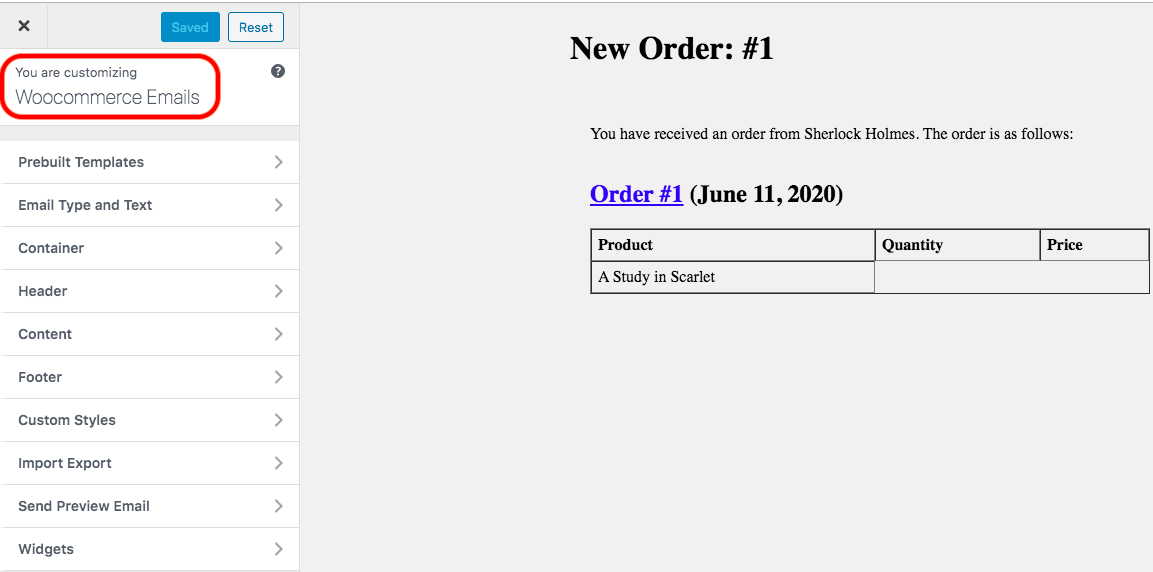
This plugin allows you to edit all design elements of your email templates, including email type, container, header, content, footer, and custom styles. Additionally, an email testing feature lets you receive real test emails in your inbox.
Thanks to Kadence Email Designer, you no longer need to send bland emails to your customers. Well-designed emails will help you effectively impress users with your brand and business.
5. Nimble Page Builder
Nimble Page Builder is primarily a page builder plugin that allows you to easily embed drag-and-drop modules into your content. You can add various sections to your WordPress pages, posts, and custom post types, such as text editors, post grids, images, contact forms, maps, and icons.
What’s even more impressive is that you can create pages from a completely blank canvas. You’ll be able to customize the header, footer, and other sections on that page. The plugin also allows you to disable headers and footers on 404 pages. Nimble also helps you optimize your content specifically for mobile devices and lets you add custom CSS to all post types and archive pages.
The plugin features are accessible directly from your WordPress customizer, under the Content Picker section. Simply click the Plus (+) icon at the top of the page to select a module or section to build your page.
6. Custom Header Footer Scripts for Customizer
Custom Header Footer Scripts for Customizer allows you to add custom scripts to your header and footer directly from the WordPress customizer. You can include multiple scripts simultaneously. Google Analytics code can also be inserted separately in the header and footer.
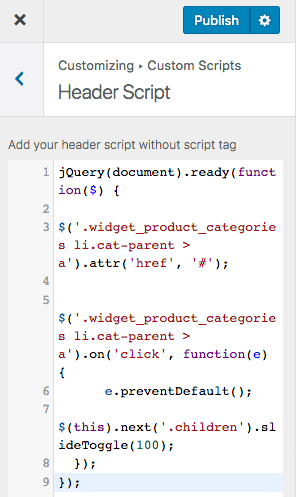
Since you’re editing through the WordPress customizer, you can view live changes instantly. The new header and footer become visible as soon as you input a script.
7. Advanced Dynamic Pricing for WooCommerce
Advanced Dynamic Pricing for WooCommerce helps you create discounts and pricing rules for your WooCommerce store. You can choose from a variety of available pricing dynamics from the rules list.
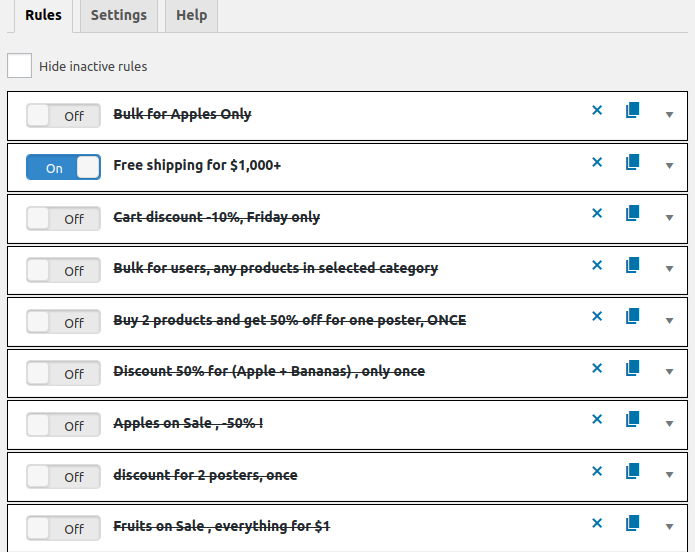
For example, when your promotion strategy ends and you no longer want to offer discounts, you can activate or deactivate rules with just a single click.
Default pricing rules can be edited based on dollar amount adjustments, percentage adjustments, or a set of fixed prices for individual products or product bundles.
The plugin supports both role-based and bulk pricing. The bulk pricing table is available in your WordPress customizer, making it easy to redesign or modify as needed.
With over 9,000 active installations and a 4.9-star rating, this plugin has clearly earned users’ trust in its effectiveness.
Conclusion
Each of these plugins offers a unique set of benefits and potential drawbacks that can significantly impact your theme customization. While one allows you to redesign password forms for protected content, others help you build pages and posts effortlessly.
Now it’s up to you to decide which plugin you want to install to extend your WordPress customizer functionality. You might choose PPWP Pro to style your password form or Advanced Dynamic Pricing for WooCommerce to redesign your pricing table.
